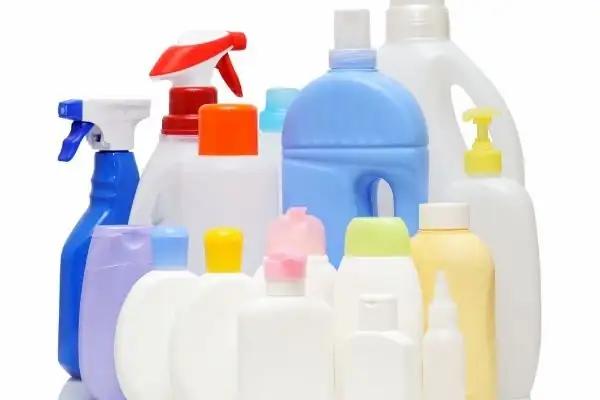
Polyethylene (HDPE)
Polyethylene (HDPE) is an important material in the plastics recycling industry thanks to its high-density structure, durability and wide range of applications. At Hür Plastik, we manage Polyethylene (HDPE) recycling processes with a focus on quality, sustainability and controlled production, providing solutions for different industries.
Polyethylene (HDPE), or high-density polyethylene, is a plastic material preferred in many manufacturing applications thanks to its rigid structure, impact resistance and long service life. Recovered through appropriate recycling processes, Polyethylene (HDPE) makes an important contribution to both environmental responsibility and production efficiency.
General Information About Polyethylene (HDPE)
Polyethylene (HDPE) stands for High Density Polyethylene. Its dense structure provides rigidity, durability and impact resistance, making it widely used in industrial, packaging, infrastructure and everyday products. It is an important plastic raw material especially in applications requiring strength and long service life.
Thanks to its recyclable structure, Polyethylene (HDPE) has an important place in sustainable manufacturing. After appropriate sorting, cleaning and processing, Polyethylene (HDPE) material can be returned to the production chain, helping reduce waste and promote more efficient use of natural resources.
Advantages of Polyethylene (HDPE)
High Durability
Its dense structure provides strong performance against impact and external influences.
Rigid and Robust Form
It has a material structure that provides confidence in products requiring long service life.
Chemical Resistance
Its resistance to many chemicals makes it valuable in a range of industrial applications.
Recyclability
An important plastic material that can be recovered through appropriate recycling steps.
Where Is Polyethylene (HDPE) Used?
Polyethylene (HDPE) is widely used across many industries because of its durable and rigid structure. Depending on material properties and manufacturing requirements, it is commonly used in applications such as:
Why Is Polyethylene (HDPE) Important?
Polyethylene (HDPE) recycling is highly important for returning durable plastic waste to the economy. After appropriate collection, sorting, cleaning and processing, Polyethylene (HDPE) material can be made suitable for use in new manufacturing processes. This reduces the amount of waste released into the environment and supports resource efficiency in production.
At Hür Plastik, we follow an approach to Polyethylene (HDPE) recycling that protects quality, supports production continuity and prioritises environmental responsibility. We consider recycling not only a technical operation, but also an important part of sustainable manufacturing.
Reliable, Quality-Focused Production for Polyethylene (HDPE) Solutions
With its experience in plastics recycling, strong production infrastructure and quality-focused approach, Hür Plastik provides reliable solutions for Polyethylene (HDPE) recycling processes. Through controlled production and an approach aligned with industry needs, we aim to provide our business partners with a sustainable and planned service structure.
Contact us for detailed information about Polyethylene (HDPE) product groups and recycling processes.
Technical Data for Hür Plastik Recycled HDPE Granules
In Hür Plastik’s current technical data sheet, the product is defined as HDPE Granules, and the product type as Recycled HDPE (rHDPE) . The source is stated as post-consumer plastic waste, and the available colour/grade options are listed as White, Blue, Black and Natural. These are not general HDPE values; they are based on the product definition in Hür Plastik’s current published TDS.
The technical data sheet provides the same specification ranges for all four colour options. The MFI is given as 0.20–0.80 g/10 minat 190°C under a 2.16 kg load, and 1.00–1.40 g/10 minunder a 5.00 kg load; density is 0.94–0.96 g/cm³ and ash content is 0.20–0.60% . You can review the current document directly through the HDPE Technical Data Sheet link.
| Technical Property | Test Method / Condition | Hür Plastik TDS Range |
|---|---|---|
| MFI | ISO 1133 — 2.16 kg / 190°C | 0.20–0.80 g/10 min |
| MFI | ISO 1133 — 5.00 kg / 190°C | 1.00–1.40 g/10 min |
| Density | ISO 1183 | 0.94–0.96 g/cm³ |
| Ash content | ISO 6964 | 0.20–0.60% |
| Packaging | Big Bag | 800–1100 kg |
Why Is MFI Important for HDPE Granules?
MFI is one of the basic quality-control indicators used to compare the melt-flow behaviour of thermoplastic materials under specified temperature and load conditions. However, the numerical MFI value alone is not sufficient; the test temperature and applied load must be read together. It is therefore normal to obtain different results for the same material under different load conditions.
ISO 1133-1:2022, defines the standard method for determining melt mass-flow rate (MFR) and melt volume-flow rate (MVR) of thermoplastics. Hür Plastik’s HDPE TDS also reports MFI values together with the test load and temperature. The flow range required in the buyer’s own process should be evaluated separately according to part geometry, equipment and manufacturing method.
What Do Density and Ash Content Indicate in a Purchasing Decision?
Density is one of the basic physical properties used to identify polyethylene materials and monitor sample/batch consistency. Hür Plastik’s current TDS states a density range of 0.94–0.96 g/cm³ for rHDPE granules. The current ISO 1183-1:2025, defines methods that can be applied to solid specimens, granules, powders and flakes to determine the density of non-cellular plastics.
Ash content is a parameter used to evaluate the inorganic residue remaining after the test. Hür Plastik’s TDS specifies a range of 0.20–0.60% for this product group. How this value should be interpreted as an acceptance criterion must be evaluated together with the formulation and technical requirements of the target product.
How Should White, Blue, Black and Natural rHDPE Grade Options Be Evaluated?
Hür Plastik’s TDS lists HDPE granules in White, Blue, Black and Natural options. The same MFI, density and ash-content ranges are shown for all four options. However, colour selection is not merely a visual preference; the final product’s colour standard, masterbatch use, surface appearance and production tolerances can affect the purchasing decision.
Especially for visible parts or serial production where colour consistency is important, it is useful for the buyer to define sample, colour-tolerance and batch-acceptance procedures in advance. The suitability of a Natural, White, Blue or Black product for a specific application should be verified against the relevant process and final-product specification, not by colour name alone.
Which Process Should Recycled HDPE Raw Material Be Suitable For?
HDPE is a broad polyethylene family used in bottles and jerrycans, pipes, industrial handling products, packaging and various technical components. However, a particular granule should not be assumed suitable for every HDPE application. Manufacturing method, mould geometry, wall thickness, impact requirements, environmental conditions and final-product standards directly affect material selection.
ISO 17855-1, provides a classification system for the designation and specification basis of polyethylene moulding and extrusion materials. ISO 17855-2:2024 defines methods for preparing test specimens, processing and conditioning test material, and determining the properties of PE materials. These standards illustrate why it is important for purchasing teams to compare test values under equivalent conditions.
Why Is the Difference Between HDPE and LDPE Important in Purchasing?
HDPE and LDPE are members of the same polyethylene family with different structural properties. HDPE has higher density and generally offers a more rigid structure, while LDPE is more prominent in flexible applications. For this reason, simply specifying “polyethylene” is often not enough to define the correct raw material for a project.
For an informational overview of the main material differences, see our What Is HDPE? and What Is LDPE? guides. The purpose of this product page is to present Hür Plastik’s rHDPE product and the technical data that is important from a purchasing perspective, rather than only giving a general definition.
What Should Be Checked in Quality Control for rHDPE Granules?
With recycled raw materials, an acceptable initial sample does not by itself guarantee serial-production performance. Because batch sources, colour distribution, foreign-material control and processing history may vary, it is important for the buyer to define critical parameters according to its own quality procedures.
The MFI, density and ash-content ranges published in Hür Plastik’s TDS provide concrete starting data for quotations and technical evaluation. For critical production applications, the analysis results for the shipped batch may also be reviewed, and incoming quality control or sample trials may be planned where necessary. A TDS represents the product specification, while a batch analysis represents the results for a specific shipment; these two documents should not be used for the same purpose.
For general information about the structure, production and applications of recycled granules, see our recycled plastic granules guide .
How Should HDPE Granule Quotations Be Compared?
Ranking HDPE granule quotations only by price per kilogram or tonne may result in technically non-equivalent products being compared as if they were the same. MFI range, density, ash content, colour/grade, source, batch requirements, packaging and delivery terms are all part of the overall purchasing decision.
Hür Plastik’s current TDS lists the packaging type as Big Bag with a net weight of 800–1100 kg . For current commercial terms that should be evaluated together with order quantity, shipment planning and the target application, contact Hür Plastik. For general information about raw material selection, you can also review our plastic raw materials guide .
Frequently Asked Questions About HDPE Granules
Are Hür Plastik HDPE granules virgin or recycled?
Hür Plastik’s current technical data sheet defines the product type as Recycled HDPE (rHDPE) and states the source as post-consumer plastic waste. The latest version of the downloadable TDS should be checked when making a current purchasing decision.
Which colours are available for Hür Plastik rHDPE?
The current TDS lists White, Blue, Black and Natural grade options. Current supply information should be confirmed separately for the availability, quantity and target-application suitability of a particular colour option.
What is the MFI value for HDPE granules?
Hür Plastik’s current TDS specifies 0.20–0.80 g/10 min at 190°C under a 2.16 kg load and 1.00–1.40 g/10 min under a 5.00 kg load. MFI must always be read together with the test temperature and load.
What is the density range for rHDPE?
Hür Plastik’s current TDS specifies a density range of 0.94–0.96 g/cm³ for White, Blue, Black and Natural options. This is Hür Plastik’s published product range; it is not a universal limit for all HDPE products.
Why is ash content checked in HDPE granules?
The ash test is a quality-control parameter used to evaluate inorganic residue remaining after combustion of the sample. Hür Plastik’s TDS gives an ash content of 0.20–0.60%. The acceptance criterion should be evaluated according to the target product and process requirements.
Are HDPE and LDPE the same raw material?
Both belong to the polyethylene family, but they differ in density, molecular structure and related mechanical/processing properties. The correct choice should be made according to the target application; the term “polyethylene” alone is not sufficient for technical purchasing.
Share your technical criteria and requirements for rHDPE granules.
Provide information about your target application, manufacturing method, colour preference and order requirements to learn about current product and supply conditions.

