PET Recycling Process
Post-consumer PET bottles are transformed into rPET raw material suitable for reintroduction into production through controlled sorting, grinding, hot washing, flake purification and quality control stages.
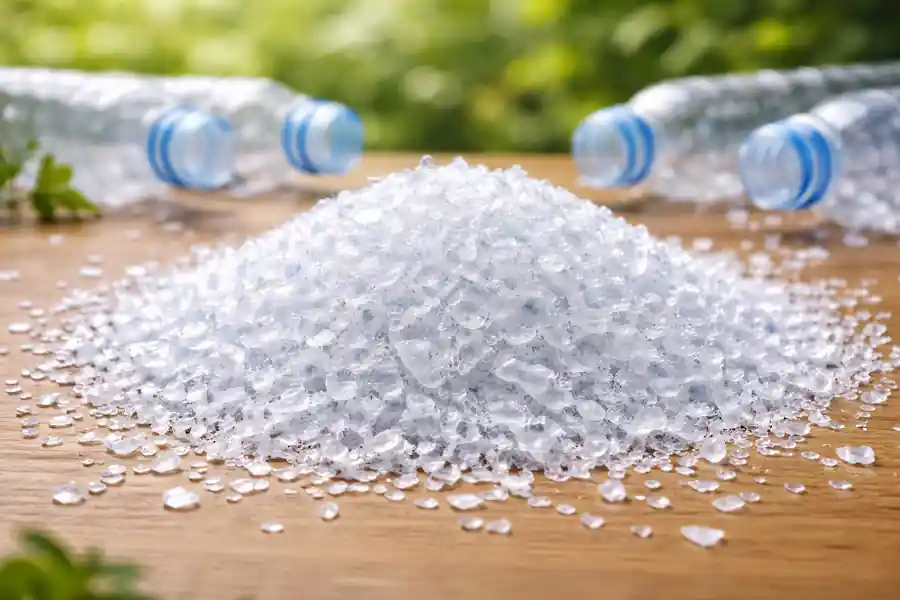
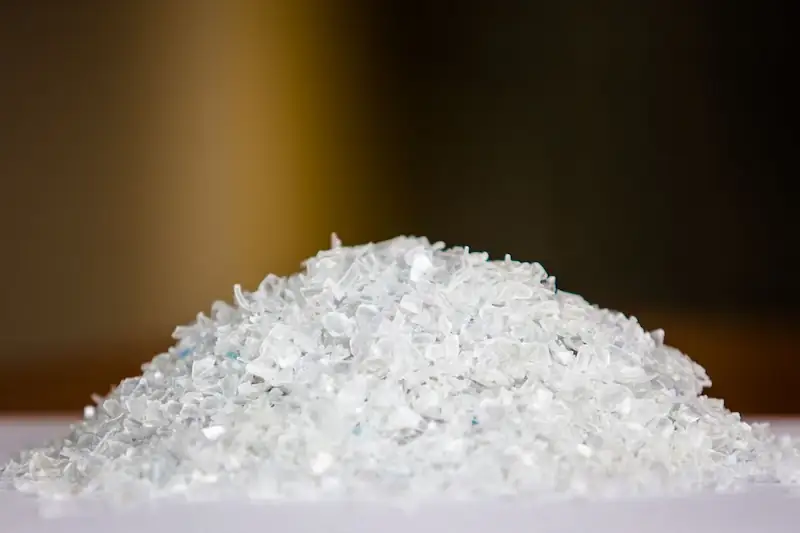
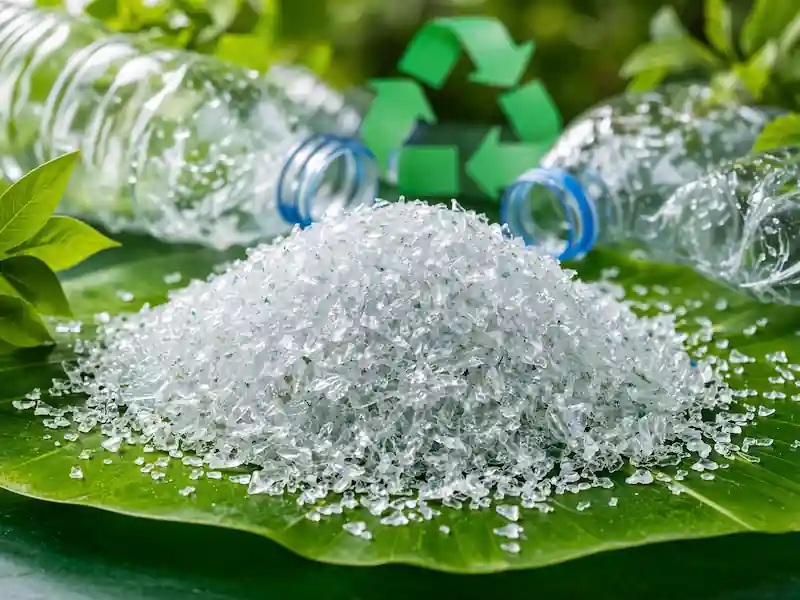
What Is PET Recycling?
PET recycling is the controlled process of converting end-of-life PET bottles into a raw material that can be reintroduced into the production chain.
PET is a thermoplastic widely used in beverage bottles and various packaging applications. When post-consumer PET is collected and sorted correctly, it can be processed into recycled raw material. However, a used PET bottle is not made up of PET polymer alone. Caps, rings, labels, adhesives, organic residues and other foreign materials may all be present in the same incoming material stream.
For this reason, an effective PET recycling process involves much more than simply grinding and washing bottles. Input control, separation of non-PET materials, color sorting, flake production, hot washing, final purification and technical checks work together as one system. Variability at one stage can affect both the appearance of the resulting rPET material and its behavior in downstream production processes.
For an industrial buyer, the objective is not simply to purchase “recycled plastic.” The real requirement is a raw material with measurable technical parameters that can be evaluated for the target process and that can deliver acceptable consistency across recurring shipments.
6 Core Steps from PET Bottles to rPET Flakes
The main stages in Hür Plastik’s production flow focus on controlled separation and processing of post-consumer plastic material into recycled raw material.
Pre-Sorting
Metal, sand, large foreign objects and materials unsuitable for the PET line are separated from the incoming plastic stream. This first control step helps provide a more consistent and homogeneous material flow to downstream equipment.
Type & Color Sorting
PET bottles of different colors and non-PET plastics are separated to create a more controlled material stream. In clear rPET production, color control is an important process stage for achieving a more consistent final product appearance.
Grinding / Flake Production
Sorted PET bottles are ground in a controlled process and converted into flake form. The purpose is not only to reduce material size, but also to create a manageable particle structure for washing, separation and downstream processing.
Hot Washing & Purification
This stage is designed to reduce labels, adhesives, surface dirt and organic residues. Washing performance is one of the critical factors affecting final flake purity and process stability in subsequent manufacturing stages.
Flake Separation
The washed flake stream undergoes further optical and color control. Unwanted colors and foreign materials are reduced to obtain a more homogeneous rPET raw material stream.
Quality Control & Packaging
The product is technically evaluated and prepared for shipment. Hür Plastik’s current PET Flake TDS specifies packaging in 800–1100 kg Big Bags.
Every stage, from initial sorting to packaging, affects the next.
If a non-PET material is not removed at the beginning of the process, it can become a smaller contamination source after grinding. Likewise, variability in washing can increase the burden on final separation and downstream production processes.
A well-managed PET recycling facility should therefore be evaluated not by the performance of a single machine, but by how consistently the entire line is controlled as one integrated process.
Why Are Input Quality and Contamination Critical?
Foreign materials in a post-consumer PET stream can affect multiple stages, from the visual appearance of the flake to performance in downstream production.
Caps & Rings
PET bottle caps and rings may be manufactured from different polymers. Separating these materials from the PET stream is important for product purity.
Labels & Adhesives
Label materials and adhesive residues can increase the load on the washing process and raise the risk of unwanted residues remaining in the final flake.
Color Mix
For clear rPET, controlling different colors is a quality criterion that should be considered in relation to final appearance and the buyer’s target application.
Foreign Materials
Reducing metal, sand, other plastics and non-process materials is important for both equipment behavior and final product quality.
A clean-looking sample is not sufficient on its own. The technical data sheet, analysis results, compatibility with the target process and consistency between batches should be evaluated together. For more detailed technical criteria, see our PET Flake Quality guide.
Hür Plastik rPET Flakes Clear
Technical evaluation of the commercial output of a PET recycling process should be based not only on visual quality, but also on measurable product parameters. The values below are those published in Hür Plastik’s current PET Flake technical data sheet.
This page does not repeat the full TDS. The product’s technical and commercial details are presented separately on the PET Flake product page.
Technical Data Sheet (PDF)What Do IV, Moisture and Flake Size Mean?
Intrinsic Viscosity
IV is an important technical parameter that provides information about the viscosity behavior and molecular structure of PET. Two materials sold under the same “PET Flake” description may have different IV ranges. The range required for the target application should be evaluated together with the product documentation and actual process trials.
Storage & Process Behavior
PET can absorb moisture. Storage conditions, the amount of time packaging remains open and pre-process preparation can affect the condition of the material. The moisture value in the TDS provides a product specification reference; final drying conditions should be determined according to the buyer’s process requirements.
Feeding & Processability
Flake size can be relevant to conveying, drying, feeding and downstream processing. Hür Plastik’s current product documentation specifies a range of 2–12 mm. This value applies to Hür Plastik’s product and should not be interpreted as a universal standard for all rPET Flake materials.
When choosing a PET recycling company, do not compare price per tonne alone.
A successful first sample is important, but in regular production the real requirement is for recurring shipments to remain within an acceptable quality range. rPET Flake products from different suppliers may carry the same commercial name while differing in source material, IV, moisture, size, color and contamination characteristics.
Price should therefore be evaluated together with the TDS, sample performance, consistency across recurring supply, packaging format and logistics conditions. Sharing the target application and technical expectations with the supplier from the outset can support a more accurate product match.
Repeatable quality matters as much as a good sample.
A purchasing decision for recycled raw materials should not be based on a single sample alone. In serial production, the important point is whether different shipments can remain within the targeted technical range and an acceptable visual profile.
Sample Approval
An initial sample is a starting point for observing how the raw material behaves in the target machine and process. However, one successful trial does not by itself demonstrate that every future shipment will produce the same result.
Batch-by-Batch Monitoring
When technical values, visual condition and actual production performance are monitored regularly, a supplier’s consistency over time can be evaluated more effectively.
Technical Communication
When the target application, color expectations, monthly consumption, packaging preference and critical process parameters are shared in advance, product matching and quotation discussions do not have to rely on price alone.
For recycled raw materials such as rPET Flake, the natural variability of the input stream makes process control even more important. TDS data, sample evaluation, batch control and serial production results should therefore be reviewed together. For a manufacturer with regular consumption, continuity of supply and quality consistency can be as important as a low unit price.
Production scale, technical documentation and process discipline.
Hür Plastik has been active in plastic recycling and raw material production since 1980. Its production infrastructure in Nevşehir covers several polymer groups, including PET, HDPE, PP, PS, PA and ABS.
According to the company’s publicly available corporate information, Hür Plastik operates across 250,000 m² of open area and 50,000 m² of indoor area, with a total processing capacity of 105,000 tonnes/year. On the PET side, providing source, IV, moisture, size and packaging information for rPET Flakes Clear through a technical data sheet makes B2B evaluation more transparent and measurable.
General technical framework for PET recycling
General principles for the recovery and recycling of plastic waste.
View the ISO reference ↗General process framework for mechanical plastics recycling.
View the reference ↗About PET Recycling
What is PET recycling?
PET recycling is the process of converting post-consumer PET into a raw material that can be used again in production through sorting, grinding, washing, purification and quality control stages.
Why is hot washing important in PET bottle recycling?
Hot washing helps reduce labels, adhesives, organic residues and surface contamination. Washing performance is important for flake purity and downstream production processes.
What is the PET recycling output produced by Hür Plastik?
Hür Plastik’s current product documentation identifies the PET product as rPET Flakes Clear. The source is specified as 100% post-consumer PET bottles.
What are the technical specifications of Hür Plastik rPET Flake?
The current TDS specifies an IV of 0.70–0.82 dl/g, moisture of 0.4–0.6%, size of 2–12 mm and packaging in 800–1100 kg Big Bags.
What applications can rPET Flake be used for?
Hür Plastik’s current TDS lists Textile, Sheet and Packaging applications. Suitability for a specific production process should be evaluated separately according to the target application and product specification.
Is the product suitable for food-grade or bottle-to-bottle applications?
The current product TDS does not include an explicit food-grade or bottle-to-bottle suitability statement. Therefore, this page does not make such a claim. Any required compliance documentation for specific applications should be verified separately.
Let’s discuss the technical requirements for your rPET Flake needs.
Share your target application, quality requirements and purchasing plan with us. Contact Hür Plastik for current product and supply information.