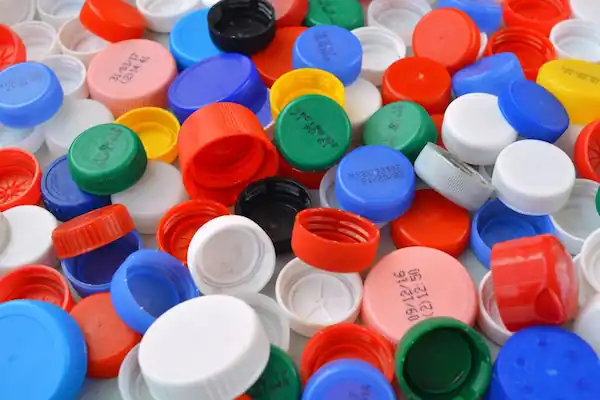
Polypropylene (PP)
Polypropylene (PP) is an important material in the plastics recycling industry thanks to its durability, lightweight structure and broad range of applications. At Hür Plastik, we manage PP recycling processes with a focus on quality, sustainability and efficiency, providing solutions tailored to the needs of different industries.
Polypropylene is one of the plastics preferred across many industrial applications thanks to its high chemical resistance, impact performance and processability. Recovered for reuse through proper sorting and controlled production, PP material offers important economic and environmental advantages.
General Information About Polypropylene (PP)
Polypropylene (PP) is a lightweight and durable thermoplastic raw material. Its resistance to heat, moisture and many chemicals makes it widely used in different manufacturing applications. Its combination of durability and low weight gives polypropylene an important position in industrial production.
Thanks to its recyclable structure, PP is also valuable from an environmental-sustainability perspective. When processed through appropriate recycling systems, it can be returned to the production chain, helping reduce waste and improve the efficiency of natural-resource use.
Advantages of PP Material
Lightweight Structure
Polypropylene has a low density, providing lightweight yet functional performance.
Impact Resistance
Its durable structure makes it a reliable choice across many industries and operating conditions.
Chemical Resistance
Its resistance to many chemicals makes it valuable in industrial applications.
Recyclability
An environmentally beneficial material that can be recovered for reuse through appropriate recycling processes.
Where Is Polypropylene Used?
Polypropylene is used across many industries thanks to its manufacturing flexibility and durable structure. Applications vary according to material form and production purpose, but it is commonly preferred in areas such as:
Why Is PP Recycling Important?
Polypropylene recycling is highly important for returning plastic waste to the economy. After appropriate sorting, cleaning and processing, PP material can be made suitable for production again. This supports more efficient waste management and more controlled use of limited resources.
At Hür Plastik, we follow an approach that protects quality, supports production continuity and prioritises environmental responsibility throughout recycling processes. We view polypropylene recycling not only as a technical operation, but also as an important part of sustainable manufacturing.
A Reliable Production Approach for Polypropylene Solutions
With its experience in plastics recycling, production infrastructure and quality-focused approach, Hür Plastik provides reliable solutions for PP recycling processes. We emphasise controlled operations at every stage of production while adopting a sustainable and efficient system aligned with customer requirements.
Contact us for detailed information about Polypropylene (PP) product groups and recycling processes.
What Technical Information Should Be Checked When Purchasing PP Granules?
When purchasing PP granules, identifying the material only as polypropylene is not sufficient. Polymer structure, flow behaviour, impact requirements, filler or additive content, colour and target manufacturing method can create significant differences within the same product family. The purchasing team should therefore first define the requirements of the final part and the intended process.
ISO 19069-1:2015, provides for tensile modulus, impact strength and melt mass-flow rate (MFR), as well as base-polymer parameters, intended use, processing method, additives, colorants, fillers and reinforcing materials to be considered in the classification of polypropylene moulding and extrusion materials. This approach shows why two PP granules should not be treated as technically equivalent simply because they carry the same name.
Why Are MFR or MFI Important for PP Granules?
Melt-flow value is one of the basic quality-control indicators used to compare how a thermoplastic raw material flows under specified temperature and load. Because expected flow behaviour can differ between injection moulding, extrusion and other processes, product suitability should not be decided from a single MFR/MFI number alone.
ISO 1133-1:2022, defines standard methods for determining melt mass-flow rate (MFR) and melt volume-flow rate (MVR) of thermoplastics. ISO also explains that temperature and load conditions should be stated for these tests and that flow measurements are primarily used for quality control. When supplier quotations are compared, numerical values alone can therefore be misleading if the measurement conditions are not the same.
Why Should PP Homopolymer and Copolymer Not Be Evaluated in the Same Way?
The polypropylene family includes homopolymers and copolymer structures formed by propylene with other olefins. These groups should not be assumed to have the same mechanical behaviour, impact performance or processing requirements. In recycled raw materials, mixed sources and previous-use history can further affect material behaviour.
ISO 19069-1 also addresses PP homopolymers and certain propylene copolymers within a classification system. When preparing a technical request, it is therefore better to specify the target polymer type, process, impact requirement, colour and critical quality criteria where relevant, rather than simply writing “PP”.
For an informational overview of the general structure of PP, see our What Are PP Granules? guide. The purpose of this product page, however, is to support raw-material selection and commercial evaluation rather than only answer a general information query.
How Do Fillers, Additives and Colour Affect PP Raw Material Selection?
Filler and additive content in PP granules can affect the final product’s mechanical behaviour, appearance and processing conditions. A mineral-filled, reinforced or otherwise modified grade should not be evaluated against the same technical expectations as an unfilled PP. With recycled material, source mix and previous product formulations also make this assessment important.
For colour, descriptions such as “black”, “natural” or another colour name may also be insufficient. Visible parts may require separate acceptance criteria for colour tolerance, black specks, foreign matter, surface quality or masterbatch use. Sample evaluation before serial production and, where needed, batch-level colour control can help reduce purchasing risk.
| Control Item | Why Does It Matter in Purchasing? |
|---|---|
| PP type / grade | To distinguish homopolymer, copolymer and other product characteristics |
| MFR / MFI | To compare flow behaviour for the target process under equivalent test conditions |
| Impact and stiffness | To evaluate the mechanical requirements of the final part |
| Fillers and additives | To understand how material composition affects processing and part performance |
| Colour / appearance | To control visual quality and batch consistency |
| Batch documentation | To verify critical technical criteria by shipment in serial production |
Which Manufacturing Process Should Recycled PP Granules Be Selected For?
Polypropylene is a broad material family used in packaging, plastic containers, automotive supply-industry parts, household goods, crates, textiles and various industrial products. However, a particular granule should not automatically be assumed suitable for all these applications. Flow behaviour, impact and stiffness requirements, colour, filler/additive structure and the target process should be considered together.
ISO 19069-2:2024, defines methods for preparing test specimens, processing and conditioning test material, and determining properties of PP moulding and extrusion materials. This illustrates why test methods and specimen-preparation conditions should be considered when comparing data from different suppliers.
What Should Be Checked in Quality Control for Recycled PP?
With recycled raw material, an acceptable first sample does not guarantee the same result in serial production. Variation in source material, the risk of foreign polymers, changes in filler or additive content, colour distribution and previous processing history can affect batch behaviour. It is therefore important for the buyer to define critical quality criteria from the outset.
A TDS presents the general product specification, while batch-specific analysis represents the results for a particular shipment. For critical production, incoming quality control, sample trials and, where necessary, review of batch-analysis documentation can create a more reliable purchasing process. For a general overview of quality considerations for recycled granules, see our recycled plastic granules guide .
How Should PP Granule Quotations Be Compared?
Even when two PP granule quotations use the same product name, the materials may not be technically equivalent. Polymer type, flow value, filler or additive content, colour, level of batch control, packaging, minimum order and delivery conditions may be the real reasons for the price difference. Looking only at price per kilogram or tonne may therefore fail to reflect the total purchasing cost accurately.
The purchasing team should first define the critical technical requirements for the target process and request quotations from all suppliers within the same framework. For general raw-material classes, see our plastic raw materials guide . For Hür Plastik’s current product, TDS and supply information, use our contact page .
Frequently Asked Questions About PP Granules
What are PP granules?
PP granules are the granulated form of polypropylene suitable for feeding into manufacturing processes. They may be virgin or recycled in origin. Hür Plastik’s page presents a recycling-focused PP product group; the current technical characteristics of a specific product should be verified through its TDS and current supply information.
Are PP and Moblen the same thing?
“Moblen” is a common trade name used for polypropylene in Türkiye. For technical purchasing, however, simply stating Moblen or PP is not sufficient; polymer type, grade, flow, additive/filler content and target process should also be specified.
Why are MFR/MFI checked in PP granules?
MFR/MFI help compare a material’s melt-flow behaviour under specified temperature and load. Final-part suitability, however, does not depend on this value alone; impact, stiffness, composition, colour and processing requirements should be evaluated together.
Are recycled PP and virgin PP the same?
Although they belong to the same polymer family, source history, previous thermal processing, additive and filler content, and contamination status can affect the behaviour of recycled material. Direct equivalence should not be assumed for a specific application.
Where can PP granules be used?
The PP family can be used in packaging, plastic containers, automotive applications, household goods, crates, textile/nonwoven applications and various industrial products. However, the suitability of a specific recycled grade for a specific product should be verified through technical requirements and processing trials.
What are the technical values of Hür Plastik’s PP product?
The current page includes a Technical Data Sheet PDF link, but verified MFR/MFI, density, impact or other product values are not published in the page text. For that reason, no figures are being invented here. The TDS available on the page and Hür Plastik’s current product information should be used for up-to-date values.
Share your technical criteria for your PP granule requirements.
Share your target application, manufacturing method, colour expectations and critical quality criteria to receive current product and supply information.