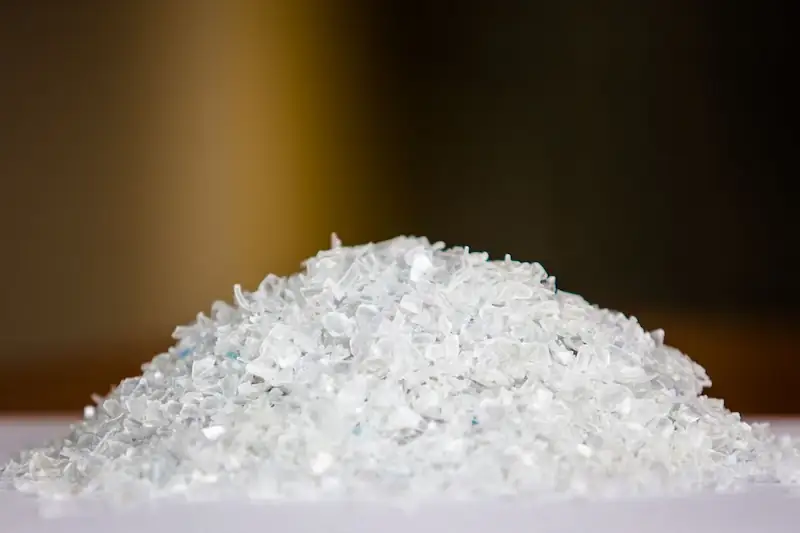
PET Flake
PET Flake is a recycled PET (rPET) raw material produced by processing post-consumer PET bottles through controlled sorting, washing and grinding stages. At Hür Plastik, we manage clear rPET Flake production with a focus on quality, process control and industrial application requirements, supplying raw material solutions for textile, sheet and packaging applications.
Hür Plastik’s clear rPET Flake product is sourced from 100% post-consumer PET bottles. The current technical card specifies an IV range of 0.70–0.82 dl/g, moisture of 0.4–0.6%, flake size of 2–12 mm and packaging in 800–1100 kg Big Bags. Suitability for a specific production line should be evaluated together with the target process and final-product requirements.
Overview of PET Flake
PET Flake is a recycled PET raw material produced by sorting, washing, grinding and quality-controlling post-consumer PET bottles. In flake form, the material can be used as a recycled raw material in textile, sheet, packaging and other suitable industrial processes.
Because PET is suitable for recycling, PET Flake can play an important role in more resource-efficient production. When processed through the appropriate recycling stages, the material can be returned to use as a secondary raw material, helping reduce waste and keep plastic resources in circulation.
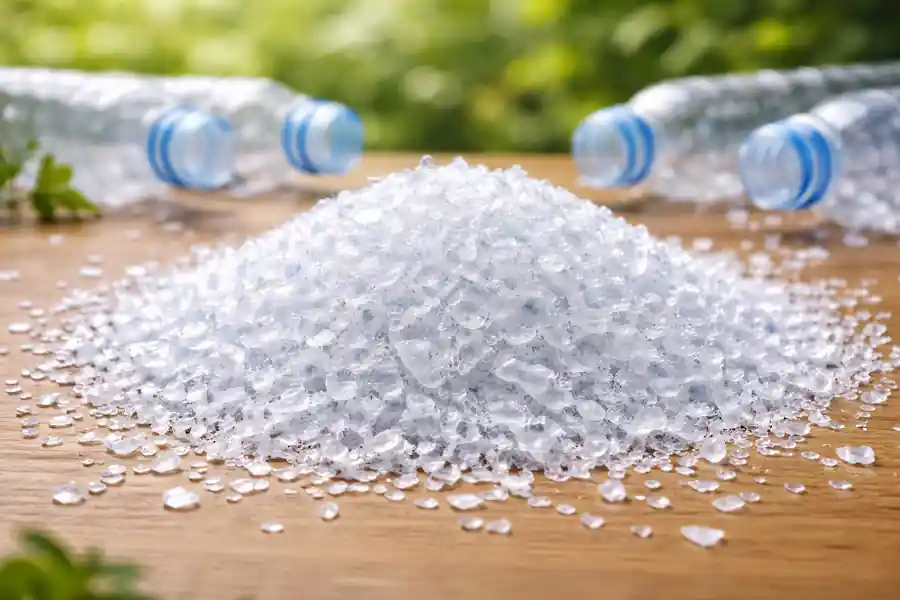
Advantages of PET Flake
Low Weight
The low weight of PET Flake can offer practical advantages in handling, storage and manufacturing operations.
High Transparency
Its clear and clean appearance makes it a recycled raw material considered for a variety of production applications.
Processability
When used in appropriate recycling and manufacturing processes, its processable form supports efficient material handling and use.
Recyclability
Its suitability for reprocessing supports circular and resource-efficient production approaches.
Where Is PET Flake Used?
PET Flake can be used as a recycled raw material in different industries. The exact application depends on production requirements and processing conditions. Common application areas include:
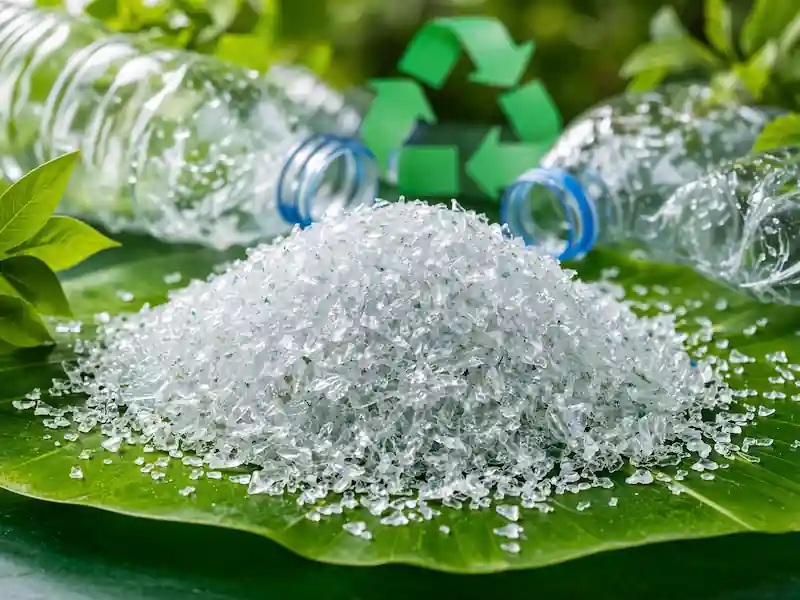
From PET Bottles to rPET Flake
Transforming post-consumer PET bottles into rPET Flake requires a series of complementary process stages, including pre-sorting, material and colour control, grinding, hot washing, final flake separation and quality control.
This page focuses on the technical and commercial characteristics of PET Flake. You can explore Hür Plastik’s process flow for converting PET bottles back into raw material, its quality-control points and its facility approach in detail on the PET Recycling page in detail.
A Quality-Focused Approach to PET Flake Production
Hür Plastik combines its experience in plastics recycling with established production infrastructure and a quality-focused approach to PET Flake. Controlled operations are prioritised throughout production, with an emphasis on efficient, sustainable processes aligned with customer requirements.
Contact us for detailed information about PET Flake products, technical specifications and recycling processes.
Why Does Technical Data Matter When Selecting Recycled PET Raw Material?
When purchasing industrial raw materials, appearance or recycled-content information alone is not enough. The target production process, technical specification, batch consistency, storage conditions and final-product requirements should be evaluated together. The clear rPET product technical card shown above brings together IV, moisture, flake size, origin, applications and packaging information for quick review by purchasing teams.
Textile, sheet and packaging applications do not operate under identical processing conditions. Values in the technical data sheet should therefore be compared with the requirements of the intended production line. To learn more about the material form and its place in the production chain, see the guide to PET Flake product forms and, for a closer look at quality criteria, see the PET Flake quality guide for further guidance.
Which Technical Criteria Should Be Checked During Purchasing?
Selecting the right raw material for B2B purchasing requires more than comparing unit prices. The behaviour of recycled PET in a production line depends on its technical properties, pre-processing preparation and the quality requirements of the final product. Current technical documents should therefore be reviewed at quotation stage and critical parameters compared with the buyer’s own acceptance criteria.
1. IV Value
Intrinsic Viscosity (IV) is an important technical indicator used to assess the molecular characteristics and processing behaviour of PET-based materials. In the current Data Sheet section on this page, the IV range for the clear rPET product is 0.70–0.82 dl/g . Suitability should be assessed together with the target process and final-product requirements.
2. Moisture
PET is a hygroscopic polymer, making moisture management important before processing. The technical card on this page specifies a moisture value of %0.4–0.6 . Storage, transport and pre-processing drying conditions can affect the state of the material when it enters production, so the buyer’s own process procedures should also be taken into account.
3. Flake Size
Flake size distribution can be relevant to feeding, separation and the stability of downstream processing. The current technical card for Hür Plastik’s clear rPET product specifies 2–12 mm . Compatibility with the intended equipment and production line should be checked against the buyer’s own process conditions.
4. Raw Material Origin
For recycled raw materials, the origin of the input stream is an important part of supplier evaluation. In the Data Sheet section, the origin of this product is defined as %100 post-consumer PET bottles . Purchasing decisions should be based on the current technical documentation in addition to the summary information provided on the website.
The Relationship Between Clear rPET Raw Material and Flake Form
rPET is a broad term for recycled PET material. Flake is one of the physical forms produced after the material has been size-reduced, sorted and processed through appropriate recycling stages. Clear flake is therefore one form of recycled PET raw material; the term rPET is not limited to this physical form.
Confusing these terms can create incorrect expectations during technical purchasing. The required product form, target application and technical specification should be clearly stated at quotation stage. For a broader explanation, see What is rPET? the guide.
What Should Be Considered for Textile, Sheet and Packaging Applications?
The technical card for the clear rPET product on this page lists the applications as Textile / Sheet / Packaging . Suitability for a particular line should not be determined from the application label alone. Drying systems, filtration requirements, colour expectations, process parameters and final-product standards can vary between production lines.
| Evaluation Area | What the Purchasing Team Should Check |
|---|---|
| Technical specification | Compare IV, moisture, size and target-process requirements |
| Raw material origin | Verify the origin stated in the product documentation |
| Application | Define the specific quality requirements of the textile, sheet or packaging line |
| Batch control | Review analysis results for the supplied batch where required |
| Packaging and logistics | Align Big Bag quantity, storage conditions and delivery planning with production requirements |
For continuous production, consistency between deliveries is as important as the suitability of the first sample. Where required, sample evaluation, incoming quality control and batch-specific document review should be planned in line with the buyer’s own quality procedures.
How Should a Technical Data Sheet and Batch Analysis Be Evaluated?
A Technical Data Sheet (TDS) provides the defined technical characteristics and specification framework for a product. A downloadable Technical Data Sheet (PDF) is available for the clear rPET product in the upper section of this page.
Where batch-specific verification is required, buyers may also review analysis documents for the supplied batch in accordance with their purchasing and quality procedures. A general product specification and measured results for a specific batch are not the same document and do not serve the same purpose. For critical applications, current technical documentation, sample results and any required batch controls should be considered together.
Is Visual Inspection Enough to Determine Technical Quality?
A clear and clean appearance can be useful for an initial assessment, but it does not replace technical quality control. For recycled PET raw materials, parameters such as IV, moisture, foreign polymers, metals and other contaminants, colour distribution and flake size may become important depending on the target application. ISO 15270:2008is one of the international references that addresses quality considerations in the recovery and recycling of plastic waste.
Sample evaluation should therefore not rely solely on whether the material “looks clean.” Required laboratory checks and acceptance criteria should be defined according to the buyer’s process. For a more detailed review of IV, moisture, PVC and other quality topics, see the PET Flake quality guide for further guidance.
The Role of PET Flake Production in the Recycling Chain
PET Flake is a recycled raw material form produced by processing post-consumer PET bottles through controlled stages such as sorting, grinding, washing and purification. From a purchasing perspective, the key point is whether the flake produced at the end of the recycling process meets the technical requirements of the intended application.
For a detailed look at the main stages of Hür Plastik’s PET recycling line, including input control, hot washing, final flake separation and quality approach, visit the PET Recycling Process page. For a broader overview of plastics recycling, see the plastics recycling guide for more information.
Should Quotations Be Compared on Price per Tonne Alone?
In industrial raw-material purchasing, the lowest unit price does not always result in the lowest total production cost. A material can affect overall cost through drying requirements, filtration, scrap rates, production stability, quality-control requirements and logistics conditions.
For this reason, technical specifications and commercial terms should be evaluated together when comparing quotations. By defining the critical technical values for the target application in advance, purchasing teams can compare offers on overall suitability rather than price alone.
Why Is Recycled PET Becoming More Important?
Increasing the use of recycled plastics in production can help return plastic waste to economic use and keep resources in circulation. The European Commission’s Plastics Strategy also aims to make the design, production, use and recycling of plastic products more circular.
For B2B buyers, a sustainability objective alone is not a sufficient product acceptance criterion. The use of recycled content should be managed together with technical performance, quality control and the requirements of the target application.
Frequently Asked Questions About Clear rPET Raw Material
What is the source of this product?
In the Data Sheet section, the origin of the clear rPET product is stated as %100 post-consumer PET bottles . For current purchasing evaluations, the downloadable technical data sheet should be checked.
Why is IV important?
IV is a technical indicator related to the molecular characteristics and processing behaviour of PET-based raw materials. The current IV range for the product on this page is 0.70–0.82 dl/g . Suitability should be assessed together with the target process and final-product requirements.
Is a TDS enough on its own for a purchasing decision?
A TDS provides the general product specification. Where batch-specific verification is required, samples, analyses and batch documentation may also need to be reviewed in accordance with the buyer’s own quality procedures.
Which applications are listed for this product?
The technical card above lists the applications for the clear rPET product as Textile / Sheet / Packaging . Suitability for a specific production line should be assessed together with that line’s technical requirements.
Are rPET and flake the same thing?
No. rPET is a broader term for recycled PET, while flake is one of the material’s physical forms. For a detailed explanation, see the rPET guide for more information.
Can technical quality be determined from appearance alone?
No. Visual inspection can be useful, but criteria such as IV, moisture, contamination, colour and flake size should be evaluated according to the target application. For a more detailed technical framework, see the quality guide for more information.
Need current technical information for clear rPET raw material?
Contact Hür Plastik to discuss your target application, technical requirements and supply needs.