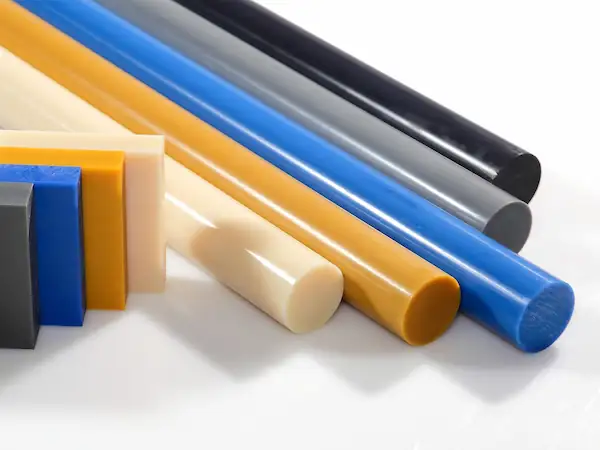
Polyamide (PA)
Polyamide (PA) is an important material in the plastics industry thanks to its high mechanical strength, wear resistance and strong performance in engineering applications. At Hür Plastik, we manage PA recycling processes with a focus on quality, sustainability and controlled production, offering solutions for different industries.
Polyamide (PA), is an engineering plastic that stands out for its durability, friction resistance and suitability for a wide range of technical applications. PA material can be recovered through recycling processes, offering important advantages for both production efficiency and environmental sustainability.
What Is Polyamide (PA)?
Polyamide (PA), commonly known as nylon, belongs to a group of high-performance thermoplastic materials. Its mechanical strength, impact resistance and wear performance make it suitable for many technical applications, from automotive components to machine parts. Its robust structure and processing characteristics make polyamide a valuable material in industrial manufacturing.
As a recyclable material, PA can be returned to the production chain after appropriate sorting and processing. This helps reduce waste and supports the reuse of valuable material resources.
What Are the Properties of Polyamide (PA)?
Polyamide (PA) Offers High Mechanical Strength
Its strong structure makes it suitable for technical applications that require durability.
Wear Resistance
Its resistance to friction provides advantages in moving and load-bearing components.
Processable Structure
Its ability to adapt to different manufacturing processes allows it to be used in many applications.
Recyclable
An important plastic material that can be recovered for reuse through appropriate recycling steps.
Where Is Polyamide (PA) Used?
Polyamide (PA) is used for different purposes across many industries thanks to its technical properties. It is particularly common in applications requiring mechanical strength and wear resistance. While applications vary by requirement, PA is frequently used in areas such as:
Why Is Polyamide (PA) Recycling Important?
Polyamide recycling is an important process for returning technical plastic waste to the economy. Through appropriate collection, sorting and processing steps, PA material can be recovered and reused in various production areas. This helps reduce material waste and promotes more efficient use of resources.
At Hür Plastik, we follow a recycling approach that protects quality, supports production continuity and prioritises environmental responsibility. We consider polyamide recycling an important part of sustainable manufacturing.
Why Choose Hür Plastik for Polyamide (PA)?
With its experience in plastics recycling, production infrastructure and quality-focused approach, Hür Plastik provides reliable solutions for PA recycling processes. Through controlled production and an approach aligned with industry needs, we aim to provide our business partners with sustainable and planned service.
Contact us for detailed information about Polyamide (PA) products and recycling processes.
What Information Should Be Checked When Purchasing Polyamide Raw Material?
Polyamide is not a narrow definition referring to a single standard product. The PA family may include different polymer types, additive systems, fillers and reinforcement options, as well as materials formulated for different processing purposes. In B2B purchasing, decisions should therefore not be based only on the terms “PA” or “nylon”; material type, target process, technical properties and final-product requirements should be evaluated together.
The international ISO 16396-1:2022 standard demonstrates the importance of information such as viscosity number, tensile modulus, additives, composition, intended use and processing method when classifying PA moulding and extrusion materials. Even materials with the same classification should not automatically be assumed to provide identical performance under every condition.
Why Should PA6, PA66 and Other Polyamide Types Be Evaluated Separately?
Different polyamide types such as PA6 and PA66 are widely used in industry; copolymers, blends, glass-fibre-reinforced grades and products modified with different additives are also available. Because these materials do not have the same chemical structure or formulation, their processing behaviour and expected final-product performance should not be treated as identical.
Hür Plastik’s current product page describes the PA family in general; it does not publish a verified product specification for a specific PA6, PA66 or reinforced grade. If you require a particular grade, it is therefore better to clearly state the material type, colour expectations, filler/reinforcement status, target application and critical technical criteria before requesting a quotation. For general classifications, see our plastic raw materials guide .
Why Is Moisture a Critical Consideration for PA Raw Material?
Materials in the polyamide family are engineering thermoplastics that can interact with moisture. Depending on the grade, moisture level and conditioning status can affect processing behaviour and measured mechanical properties. When comparing technical data, it is therefore important to check whether “dry” and “conditioned” measurements represent the same test conditions.
ISO 16396-2:2022, defines requirements for specimen preparation, processing of test material and pre-test conditioning for polyamide moulding and extrusion materials. The required drying and storage conditions for production material should be determined according to the current technical data sheet for the grade being used.
What Technical Data May Be Requested for Polyamide Granules?
The data requested by a technical purchasing team will vary according to the application. For injection moulding, extrusion or technical component production, the material name alone is not sufficient; technical results should also be provided together with the measurement method and test conditions.
| Control Item | Why Should It Be Requested? |
|---|---|
| PA type / grade | To evaluate the compatibility of PA6, PA66 or another PA structure with the target process |
| Fillers and reinforcement | Because glass fibre, mineral fillers or other additives can change final-product behaviour |
| Viscosity or flow data | To compare processing behaviour together with the specified test method and conditions |
| Moisture / conditioning | To understand the material condition before processing and the conditions under which test results were obtained |
| Colour and appearance | To evaluate compatibility with the visual requirements of the final part |
| Batch-specific analysis | To check material consistency in serial production against the buyer’s acceptance criteria |
BASF’s polyamide technical documentation, is a good example of technical data sheets and processing guides being provided on a grade-specific basis for different PA products. Values in those documents should not be interpreted as Hür Plastik product values; they are referenced only to illustrate an approach to technical documentation.
How Should the Target Application Be Defined When Selecting Recycled PA?
Expected performance differs between automotive, machinery, electrical/electronics and general technical-plastic applications. The critical criteria for a fastening component may differ from those for a housing or a moving mechanical component. During supplier discussions, it is therefore better to share the part’s operating conditions, manufacturing method, colour expectations and any mechanical or dimensional acceptance criteria rather than only naming the industry.
The upper section of this page lists automotive, machinery, electronics and technical plastic components as general applications for PA. These statements do not mean that a specific product grade is automatically suitable for every application. Suitability should be verified through current technical data and, where necessary, sample or process trials.
How Should Recycled Polyamide Raw Material Be Evaluated?
A purchasing decision for recycled engineering plastics should not be based solely on the word “recycled”. Input type, sorting accuracy, the risk of foreign polymers or unwanted materials, processing history and batch consistency are all important for the final application. The presence of different PA types and modified products within the polyamide family makes accurate material identification particularly important.
When discussing supply with a supplier, the required documentation, sample needs and acceptance criteria can be defined from the outset together with the target application. For broader information about recycled raw materials in granule form and the general production chain, see our recycled plastic granules guide .
What Should Be Considered When Comparing PA Granule Quotations?
Even if two quotations are both described as “PA granules”, they may not represent the same technical product. Polymer type, additive or reinforcement content, colour, physical form, technical values, batch requirements, packaging and delivery terms all affect true comparability. Comparing only the price per kilogram or tonne is therefore not sufficient.
The purchasing team should first define the acceptance criteria and request all quotations within the same technical framework. This makes it easier to determine whether a price difference is driven by grade, quality level, logistics or another technical requirement. For current product suitability and supply terms, contact Hür Plastik.
Frequently Asked Questions About Polyamide (PA)
Are polyamide and nylon the same thing?
“Nylon” is a name commonly used for the polyamide family in everyday language; however, using only the term nylon is not sufficient for technical purchasing. PA6, PA66 and other PA types may be available with different additive and reinforcement systems. The actual grade and technical specification should therefore be verified separately.
Are PA6 and PA66 the same material?
No. Both belong to the polyamide family, but their chemical structures and related processing/performance characteristics are not the same. Selection for a specific application should consider current technical data together with the buyer’s processing and part requirements.
Why may PA raw material require drying?
Polyamides are materials that can interact with moisture. The required pre-processing drying conditions depend on the grade and the material’s current moisture condition. Rather than applying a universal temperature or time, it is safer to follow the processing instructions in the product’s current technical data sheet.
What documents should be requested when purchasing recycled PA granules?
Depending on the requirement, a technical data sheet, product definition and batch-specific analysis information may be requested. The key point is to understand the methods and conditions under which the reported test results were obtained.
Can polyamide be used in automotive and machine components?
The PA family is widely used in automotive, machinery and various engineering applications. However, the suitability of a specific recycled grade for a specific part cannot be determined from general application examples alone; the technical requirements must also be verified.
Is the PA product on Hür Plastik’s page PA6 or PA66?
The current product page does not identify a specific PA6 or PA66 grade. It would therefore be incorrect to draw that conclusion from the web page. If you require a specific PA type, colour, additive or process capability, contact Hür Plastik directly for current product information.
Verify current product information for your PA raw material requirements.
Share your application, process and required technical criteria to receive information about available product options.